
Sixty Seconds Would Have Been Enough

Vintage Lemania stopwatch displaying seconds, minutes, and 1/10-second scales

The Home Ministry has decided that all six stanzas of Vande Mataram, the full official version, which runs three minutes and ten seconds, must now be rendered at government functions, flag ceremonies, and civil investitures, and that it must come before Jana Gana Mana. Schools have been “urged” to sing it at morning assembly, which in Indian administrative language means they will.

Read that directive, and you can practically see the room it was written in. Wood panelling. A long table. Not one person under fifty-five. This is a decision made by people whose diaries have gaps in them, for people whose diaries do not. Let me be blunt about the arithmetic, because nobody in that room did it. The national anthem takes fifty-two seconds. The new national song takes one hundred and ninety seconds. We have just quadrupled the ceremonial standing time at every official event in the country. Multiply that by every school assembly, every college convocation, every departmental function, every parade – across 1.4 billion people – and you are looking at one of the largest voluntary donations of national productivity in recent memory. For a country that constantly talks about the demographic dividend and doing more with less, we have found a remarkable way to do less with more.

And here is the part the committee genuinely does not understand: young India is not moved by it. Not because they lack patriotism – that charge is lazy and wrong – but because a slow, solemn, Sanskritised dirge is not how this generation feels anything. They feel things in ninety-second reels, in stadium chants, in a beat that lifts the chest. Ask any twenty-year-old standing in the fourth row of an assembly what they were thinking during stanza five. They were thinking about breakfast.

So here is the alternative, and it is not a rejection of the song – it is a rescue of it.

Commission a new official rendition. Keep the words sacred, change everything else. Make it fast. Make it big. Percussion that starts on the first beat. A tempo you march to, not a tempo you endure. Voices that build rather than drone. And cap it at sixty seconds – one minute, no exceptions, no ceremonial drumroll of seven slow marching paces to warm us up first.

A.R. Rahman proved this in 1997. Maa Tujhe Salaam did more for the emotional life of that phrase in six minutes of radio play than fifty years of harmonium have managed. We know how to do this. We simply did not ask the people who know how.

Reverence is not measured in minutes. A song that thrills you in sixty seconds will be sung willingly for a century. A song that bores you for one hundred and ninety will be endured, resented, and quietly mouthed.

We had a chance to make the national song feel national again. Instead, we made it longer.
How Hindustani Classical Music Can Be Related to Western Rock and Metal

Hindustani classical music and rock and metal music are both powerful forms of art that can transcend boundaries and cultures. By fusing them together, musicians can create new sounds and experiences that enrich the musical landscape.

Hindustani classical music is one of the oldest and richest forms of music in the world. It has a complex and sophisticated system of ragas (melodic modes), talas (rhythmic cycles) and improvisation. Hindustani classical music has influenced many genres of music, including rock and metal.

Rock and metal music are genres that emerged in the 20th century, characterized by electric guitars, drums, bass and vocals. They often use distortion, heavy riffs, power chords and solos. Rock and metal music have also been influenced by various styles of music, including blues, jazz, folk and classical.

V Shivapriya and BR Somashekar Jois perform rhythmic phrases set to Mishrachaapu Tala. Remixed by Andre Antunes

One of the pioneers of fusing Hindustani classical music with rock and metal music was Ravi Shankar, a legendary sitar player and composer. He collaborated with many Western musicians, such as The Beatles, The Rolling Stones, George Harrison and John Coltrane. He introduced the sitar, the drone, the raga and the tala to Western audiences and inspired many rock and metal artists to experiment with Indian sounds and scales.

Another example of fusion between Hindustani classical music and rock/metal is the band Shakti, formed by legendary guitar player John McLaughlin and Indian musicians L. Shankar, Zakir Hussain and T.H. “Vikku” Vinayakram. Shakti blended Indian classical music with jazz and rock, creating a unique and powerful sound that influenced many musicians around the world.

But how exactly can Hindustani classical music be related to Western rock and metal? One way is through the use of scales and modes. Hindustani music has a wide range of scales, or ragas, that can evoke different moods and emotions. These scales can be adapted for Western instruments, such as guitar or keyboard, and used to create new melodies and harmonies. For example, the pentatonic scale used in blues and rock music can be traced back to the Indian raga Bhimpalasi.

Another way is through the use of rhythm. Hindustani music has a complex system of rhythmic cycles, or talas, that can be adapted to fit into rock and metal music. Talas can add a distinctive groove and feel to the music, and can be used for improvisation and soloing.

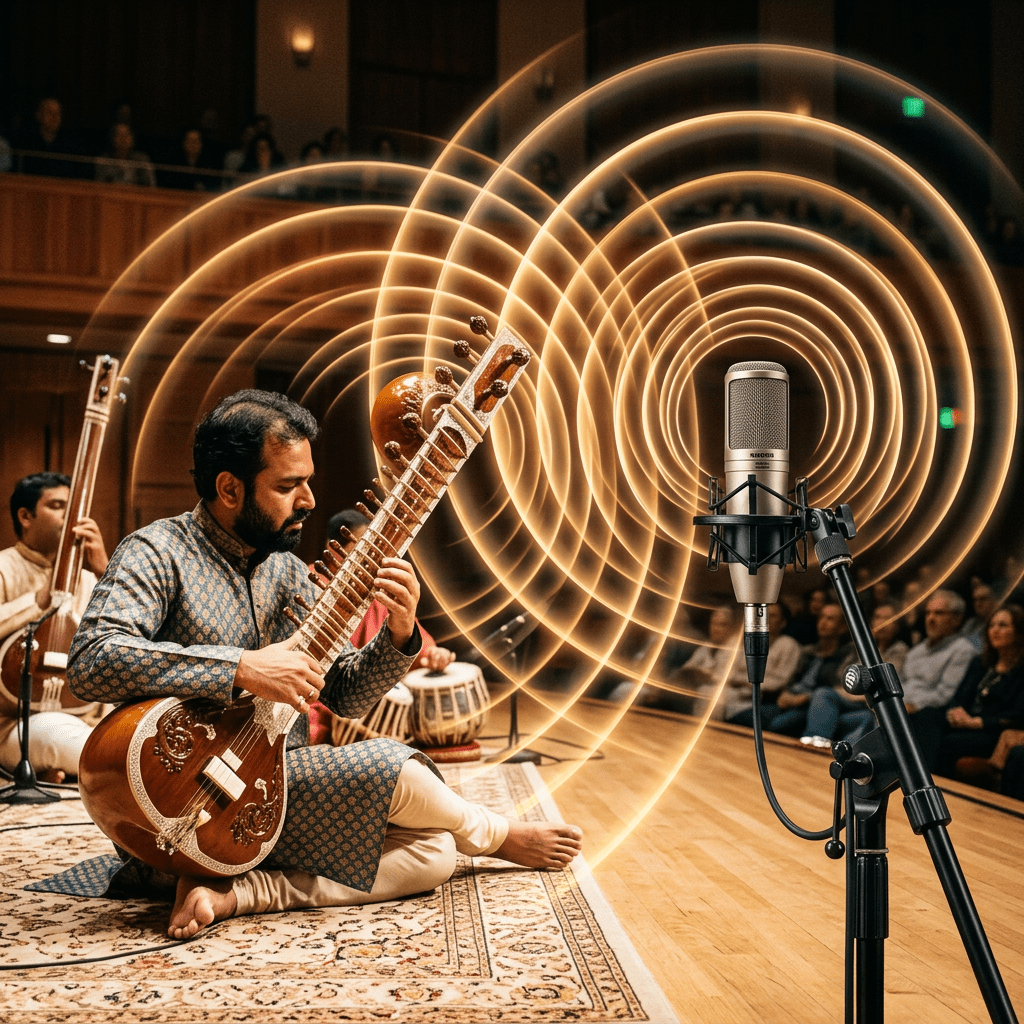
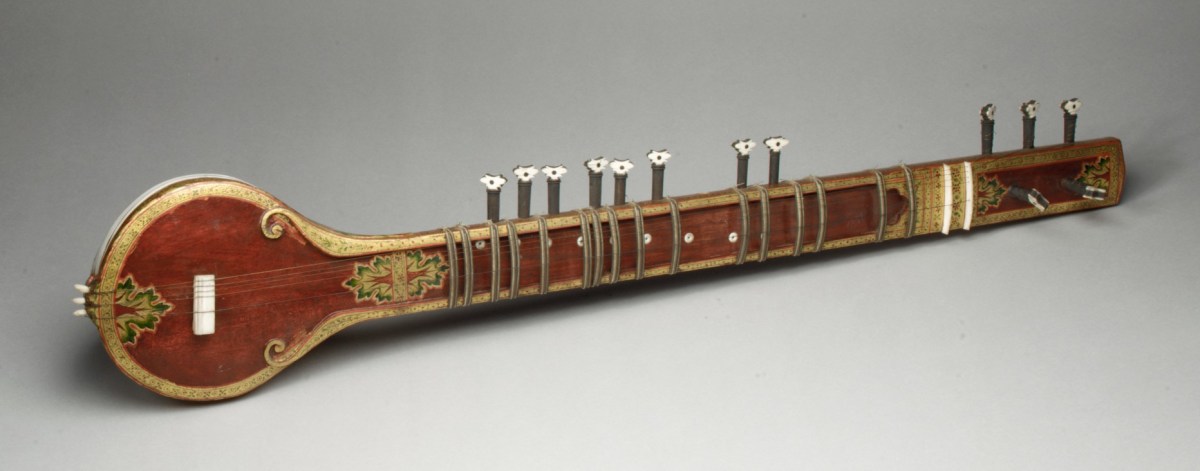
Finally, the use of Indian instruments such as sitar, tabla or sarod can add a unique flavor to rock and metal music. These instruments can be used for soloing, accompaniment or simply as a texture in the music.

In conclusion, Hindustani classical music and Western rock/metal music may seem like two very different genres, but they actually have a lot in common. The fusion of these two styles has led to some incredible music, and has opened the door to new creative possibilities for musicians around the world. So next time you listen to your favorite rock or metal band, remember that there may be a little bit of Hindustani classical music in there too.

———————————————————

Some examples of rock and metal songs that incorporate elements of Hindustani classical music are:

  • Norwegian Wood by The Beatles: This song features George Harrison playing the sitar in a raga-like melody.
  • Paint It Black by The Rolling Stones: This song uses a sitar riff and a drone in the background.
  • Kashmir by Led Zeppelin: This song uses a modal scale similar to a raga and a rhythmic pattern inspired by a tala.
  • Shakti by John McLaughlin: This song is a fusion of jazz-rock and Hindustani classical music, featuring McLaughlin on guitar, Zakir Hussain on tabla, L. Shankar on violin and Vikku Vinayakram on ghatam.
  • Om by John Coltrane: This song is a free jazz improvisation based on a chant from the Hindu scripture Bhagavad Gita, featuring Coltrane on saxophone, Pharoah Sanders on saxophone and flute, Alice Coltrane on piano and harp, Joe Brazil on flute, Donald Garrett on bass clarinet and bass, Jimmy Garrison on bass, Rashied Ali on drums and percussion and Ray Appleton on percussion.
  • Darbari Blues by Naad: This song is a fusion of Hindustani classical vocals with eclectic world flavours, featuring Sanjeevani Bhelande on vocals, Middle Eastern percussion, ambient bass grooves and Spanish guitars.

Hindustani classical music and rock and metal music may seem very different at first glance, but they share some common elements, such as:

– The use of improvisation: Both genres rely heavily on spontaneous creativity and expression.
– The use of emotion: Both genres convey various moods and feelings through music.
– The use of contrast: Both genres use dynamics, tempo changes, modulation and variation to create tension and release.

A Poem: Laughter Laughter Laughter

One of the pitfalls on the spiritual path or even life, is “seriousness”. We get way too serious about our spirituality, the different processes we have to follow etc. But truly it is the “lightness of being”, that connects ONE with the deep Inner Self that we were talking about in yesterday’s video.

During these overly serious times, I thought I would share a poem I wrote ten years ago and recited, titled “Laughter, Laughter, Laughter”. Hope you enjoy it and also start your day (at whatever point in time you read it) filled with laughter. This is a recording from 2014 in Pune:

A Poem: Laughter, Laughter, Laughter

Tonight I just want to laugh to bed,
Tonight I just want to feel the reverberation of my smile,
Tonight I just want to feel the joy of living,
Just for tonight, I want to say hi.

Because tonight, I am joy,
In my belly is joy, in my heart is love,
In my hands are two gratitudes,
One for my God, and one for me.
I laugh because I separated the two.
Just for tonight, I will laugh to bed.

It doesn’t stop, this multitude of laughter,
It comes like a torrent I feel familiar with.
It washes away, everything of me and mine,
This beautiful laughter, it makes me smile.
In my belly is laughter, in my space is laughter, 
I only feel this bliss tonight.

You may find it funny, or you may find it strange, 
But every time I read, that the questions have gone  and the answers are there, My belly it just smiles, it smiles, it smiles.

Please come and share my laughter,
I have loads and loads of it to give away,
I have been hiding it and pretending to be civilised.
And this pretence, makes me laugh and laugh,
Even more than I smile.

I pretend to have manners, 
I pretend to talk civilised,
I pretend that I even can speak,
What a wonder am I.
When what I am really,
is just a bundle who is high.
Laughter, laughter, laughter,
please tickle me every night.

Video length: 3 min 23 sec