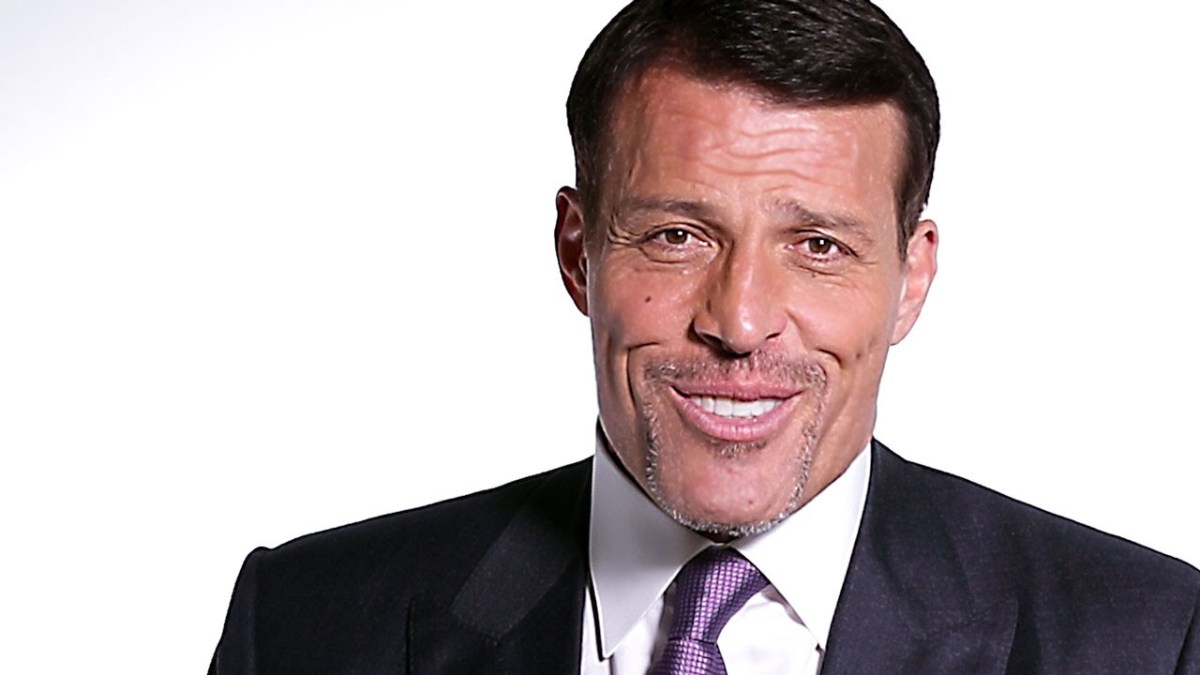
Being Productive Through Trying Times: 4 strategies to keep working

We all face challenges and difficulties in our lives, whether it’s personal, professional, or global. Sometimes, these hardships can make us feel overwhelmed, stressed, or demotivated. How can we maintain our productivity and performance when things get tough? Here are four strategies that can help you cope and keep working through trying times.

Being productive

  1. Acknowledge your emotions and seek support. It’s normal and healthy to have emotional reactions to stressful situations. Don’t ignore or suppress your feelings, but rather acknowledge them and express them in constructive ways. For example, you can talk to a trusted friend, family member, or colleague, write in a journal, or seek professional help if needed. Sharing your emotions can help you feel less alone and more understood.
  2. Focus on what you can control and let go of what you can’t. When facing hardships, it’s easy to feel powerless and hopeless. However, you can regain a sense of agency and optimism by focusing on the aspects of your situation that you can influence and change, and letting go of the ones that you can’t. For example, you can’t control the outcome of a global pandemic, but you can control how you protect yourself and others by following health guidelines. You can also control how you spend your time and energy, and what goals you set for yourself.
  3. Prioritize your tasks and set realistic expectations. When you have a lot on your plate, it can be hard to decide what to do first and how to manage your time. To avoid feeling overwhelmed and burned out, it’s important to prioritize your tasks according to their urgency and importance, and set realistic expectations for yourself and others. For example, you can use a matrix or a list to rank your tasks from high to low priority, and then focus on the most critical ones first. You can also break down larger projects into smaller and more manageable steps, and set specific deadlines for each one. Don’t forget to celebrate your progress and achievements along the way.
  4. Take care of yourself and practice self-compassion. Being productive doesn’t mean neglecting your physical, mental, and emotional well-being. In fact, taking care of yourself is essential for maintaining your energy, motivation, and resilience. Make sure you get enough sleep, eat well, exercise regularly, and engage in activities that bring you joy and relaxation. Also, practice self-compassion by being kind and supportive to yourself, especially when you make mistakes or face setbacks. Remember that you are not alone in your struggles, and that you are doing the best you can with what you have.


The Illusion of Separating Personal and Professional Life: Integrating for a More Fulfilling Experience

In this article, I argue that the separation between the personal and professional is simply a mental concept. Life is constructed by nature and is one continuum. We must weave together what we may consider personal and what we may consider work. Work is as much a part of our lives as our personal stuff is. And by integrating them, we can achieve more harmony, happiness, and fulfilment.

Many people struggle to balance their personal and professional lives. They feel stressed, overwhelmed, and guilty when they must juggle multiple roles and responsibilities. They think that they must separate their work from their life and that they have to sacrifice one for the other. But is this true? Is there such a thing as a clear-cut distinction between the personal and the professional? Or is this just a mental concept that we have created to cope with the complexity of modern life?

In this article, I argue that the separation between the personal and professional is simply a mental concept. Life is constructed by nature and is one continuum. We must weave together what we may consider personal and what we may consider work. Work is as much a part of our lives as our personal stuff is. And by integrating them, we can achieve more harmony, happiness, and fulfilment.

Photo by Kampus Production on Pexels.com

Let’s start by examining the origin of the idea of separating the personal and the professional. Historically, this idea emerged with the rise of industrialisation and urbanisation. People started to work in factories, offices, and other places that were physically separated from their homes and communities. They also started to specialise in different fields and professions that required specific skills and knowledge. As a result, they developed different identities and roles for their work and their life. They had to follow different rules, norms, and expectations in each domain. They had to switch between different modes of thinking, feeling, and behaving.

This separation was reinforced by the social and cultural values of modernity. Individualism, rationality, efficiency, productivity, competition, and achievement became the dominant ideals of work. Emotion, intuition, creativity, spirituality, cooperation, and well-being became the dominant ideals of life. Work was seen as a means to an end, a way to earn money and status. Life was seen as an end in itself, a way to enjoy leisure and happiness. Work was associated with stress and pressure. Life was associated with relaxation and pleasure.

However, this separation is not natural or inevitable. It is a social construct that we have created and maintained through our beliefs, attitudes, and behaviours. It is not based on any objective reality or universal truth. It is based on our subjective perceptions and interpretations of reality. And these perceptions and interpretations can change over time and across contexts.

In fact, there are many examples of cultures and societies that do not separate the personal and the professional as much as is done in the modern world. For instance, in many indigenous cultures, work is seen as an expression of one’s identity, purpose, and spirituality. It is not just a way to make a living, but a way to make meaning. Work is integrated with life in a holistic way. People do not work for external rewards or recognition but for internal satisfaction and contribution. They do not work against nature or other people, but with them in harmony and cooperation.

Similarly, in many Eastern cultures, work is seen as a part of one’s duty, karma, and dharma. It is not just a matter of choice or preference, but a matter of responsibility and destiny. Work is aligned with life in a moral way. People do not work for themselves or their own interests but for others and the greater good. They do not work out of ego or desire, but out of humility and detachment.

By integrating our personal and professional lives, we can create a more holistic and fulfilling experience of life. We can enjoy the benefits of both domains and leverage the synergies and opportunities that arise from them. We can also avoid the conflicts and contradictions that result from trying to maintain a false dichotomy. We can live more fully and authentically, without compromising any part of ourselves.

Coming Alive Post Lockdown

The lockdown has changed all of us, as we look at a shift in our priorities, what matters to us, our relationships, work, life and deep transformation.

As the heavy lockdown reduces its restrictions in Mumbai, I stepped out for an evening walk. As usual I was stunned by the beauty of this city, the sky, the roadside, the gentle opening up of things and the coming alive of spirit in every corner. The extreme, frenetic pace of Mumbai, seemed calmer, refreshed and happier. People even seemed to be walking slower. Not sure how long this will last, but still, it was refreshing to see, feel and touch earth.

The lockdown has changed all of us, as we look at a shift in our priorities, what matters to us, our relationships, work, life and deep transformation. I hope you enjoy some of the photographs from this evenings walk.

How to Break Your Negative Thinking

As a young man reading Tony Robbins, gave me an intellectual architecture, within which to set up my process of self discovery, experiment with different exercises and process some of the more esoteric happenings inside my being.

I read Tony Robbins for the first time in my college years. His book “Awaken The Giant Within”, gave me great insight into how to use my physiology and my emotions, to get the results that I was seeking on a personal and professional level. As a young man, it gave me an intellectual architecture, within which to set up my process of self discovery, experiment with different exercises and process some of the more esoteric happenings inside my being.

In this short 8 minute video Tony works with 4 women live on national TV, to move them to the kind of personal results they seek, even while they are surrounded by certain personal issues. The video is titled “How to Break Your Negative Thinking”. His basic premise is, if we want new results or outcomes, we need to create new actions; and our actions are often related to our emotional state. And this is where the use of physiology comes into play, to change certain negative emotional states. I love the framework and I hope you enjoy it to. Have a great Sunday.

Video Length: 8 min approximately