How Hindustani Classical Music Can Be Related to Western Rock and Metal

Hindustani classical music and rock and metal music are both powerful forms of art that can transcend boundaries and cultures. By fusing them together, musicians can create new sounds and experiences that enrich the musical landscape.

Hindustani classical music is one of the oldest and richest forms of music in the world. It has a complex and sophisticated system of ragas (melodic modes), talas (rhythmic cycles) and improvisation. Hindustani classical music has influenced many genres of music, including rock and metal.

Rock and metal music are genres that emerged in the 20th century, characterized by electric guitars, drums, bass and vocals. They often use distortion, heavy riffs, power chords and solos. Rock and metal music have also been influenced by various styles of music, including blues, jazz, folk and classical.

V Shivapriya and BR Somashekar Jois perform rhythmic phrases set to Mishrachaapu Tala. Remixed by Andre Antunes

One of the pioneers of fusing Hindustani classical music with rock and metal music was Ravi Shankar, a legendary sitar player and composer. He collaborated with many Western musicians, such as The Beatles, The Rolling Stones, George Harrison and John Coltrane. He introduced the sitar, the drone, the raga and the tala to Western audiences and inspired many rock and metal artists to experiment with Indian sounds and scales.

Another example of fusion between Hindustani classical music and rock/metal is the band Shakti, formed by legendary guitar player John McLaughlin and Indian musicians L. Shankar, Zakir Hussain and T.H. “Vikku” Vinayakram. Shakti blended Indian classical music with jazz and rock, creating a unique and powerful sound that influenced many musicians around the world.

But how exactly can Hindustani classical music be related to Western rock and metal? One way is through the use of scales and modes. Hindustani music has a wide range of scales, or ragas, that can evoke different moods and emotions. These scales can be adapted for Western instruments, such as guitar or keyboard, and used to create new melodies and harmonies. For example, the pentatonic scale used in blues and rock music can be traced back to the Indian raga Bhimpalasi.

Another way is through the use of rhythm. Hindustani music has a complex system of rhythmic cycles, or talas, that can be adapted to fit into rock and metal music. Talas can add a distinctive groove and feel to the music, and can be used for improvisation and soloing.

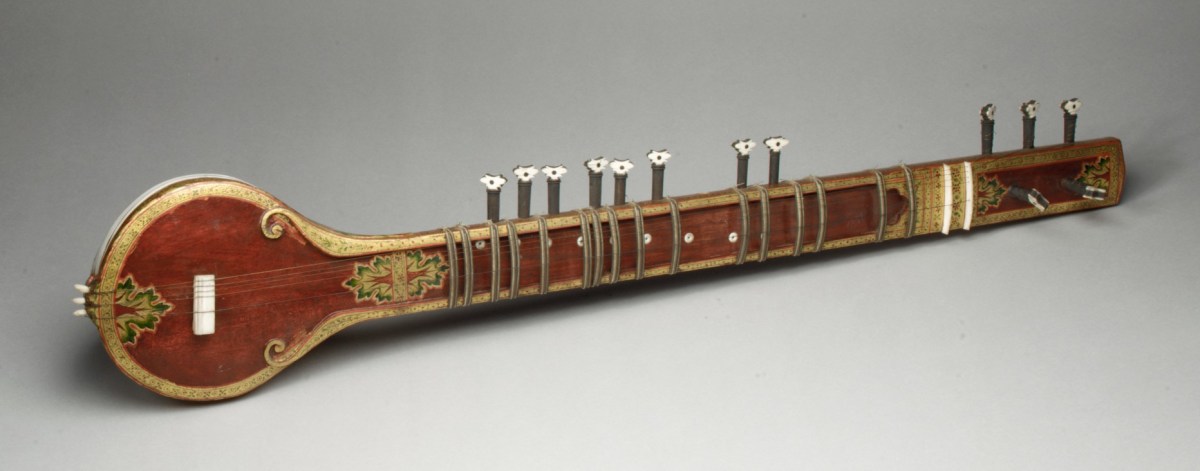
Finally, the use of Indian instruments such as sitar, tabla or sarod can add a unique flavor to rock and metal music. These instruments can be used for soloing, accompaniment or simply as a texture in the music.

In conclusion, Hindustani classical music and Western rock/metal music may seem like two very different genres, but they actually have a lot in common. The fusion of these two styles has led to some incredible music, and has opened the door to new creative possibilities for musicians around the world. So next time you listen to your favorite rock or metal band, remember that there may be a little bit of Hindustani classical music in there too.

———————————————————

Some examples of rock and metal songs that incorporate elements of Hindustani classical music are:

  • Norwegian Wood by The Beatles: This song features George Harrison playing the sitar in a raga-like melody.
  • Paint It Black by The Rolling Stones: This song uses a sitar riff and a drone in the background.
  • Kashmir by Led Zeppelin: This song uses a modal scale similar to a raga and a rhythmic pattern inspired by a tala.
  • Shakti by John McLaughlin: This song is a fusion of jazz-rock and Hindustani classical music, featuring McLaughlin on guitar, Zakir Hussain on tabla, L. Shankar on violin and Vikku Vinayakram on ghatam.
  • Om by John Coltrane: This song is a free jazz improvisation based on a chant from the Hindu scripture Bhagavad Gita, featuring Coltrane on saxophone, Pharoah Sanders on saxophone and flute, Alice Coltrane on piano and harp, Joe Brazil on flute, Donald Garrett on bass clarinet and bass, Jimmy Garrison on bass, Rashied Ali on drums and percussion and Ray Appleton on percussion.
  • Darbari Blues by Naad: This song is a fusion of Hindustani classical vocals with eclectic world flavours, featuring Sanjeevani Bhelande on vocals, Middle Eastern percussion, ambient bass grooves and Spanish guitars.

Hindustani classical music and rock and metal music may seem very different at first glance, but they share some common elements, such as:

– The use of improvisation: Both genres rely heavily on spontaneous creativity and expression.
– The use of emotion: Both genres convey various moods and feelings through music.
– The use of contrast: Both genres use dynamics, tempo changes, modulation and variation to create tension and release.

The Master Is The Way

In this video I sing a few verses from the lovely GURU GITA. The Guru Gita (Song of the Guru) is a Hindu scripture that is said to have been authored by the sage, Vyasa. The text is believed to be part of the larger Skanda Purana.

In any endeavour, a teacher, a master or a mentor is essential. Those who have practical knowledge of a subject, who have have experimented scientifically (through actually doing the practices and seeing how it works), gained mastery over their area or subject and then are available to share that, are indeed a blessing. If you want to learn to repair a car, you could read a book; but in order to become a great mechanic, you need a master mechanic to teach you over time. Similarly on the spiritual path, a master who has travelled the journey, understands the inner world, can teach and guide. Of course the journey is yours, but a Master brings it alive, challenges you and shows you the guidepost. In our Indian tradition we have called it GURU – a movement from darkness, to light.

Guru Gita with Guitar

That has been my experience of having a spiritual master. An outer master, who could actually connect one with ones deep Inner Self, or ones own Inner Master; a divine blessing in indeed. In this video I sing a few verses from the lovely GURU GITA. The Guru Gita (Song of the Guru) is a Hindu scripture that is said to have been authored by the sage, Vyasa. The text is believed to be part of the larger Skanda Purana. There are several versions of the Guru Gita, varying from around 100 to over 400 verses. 

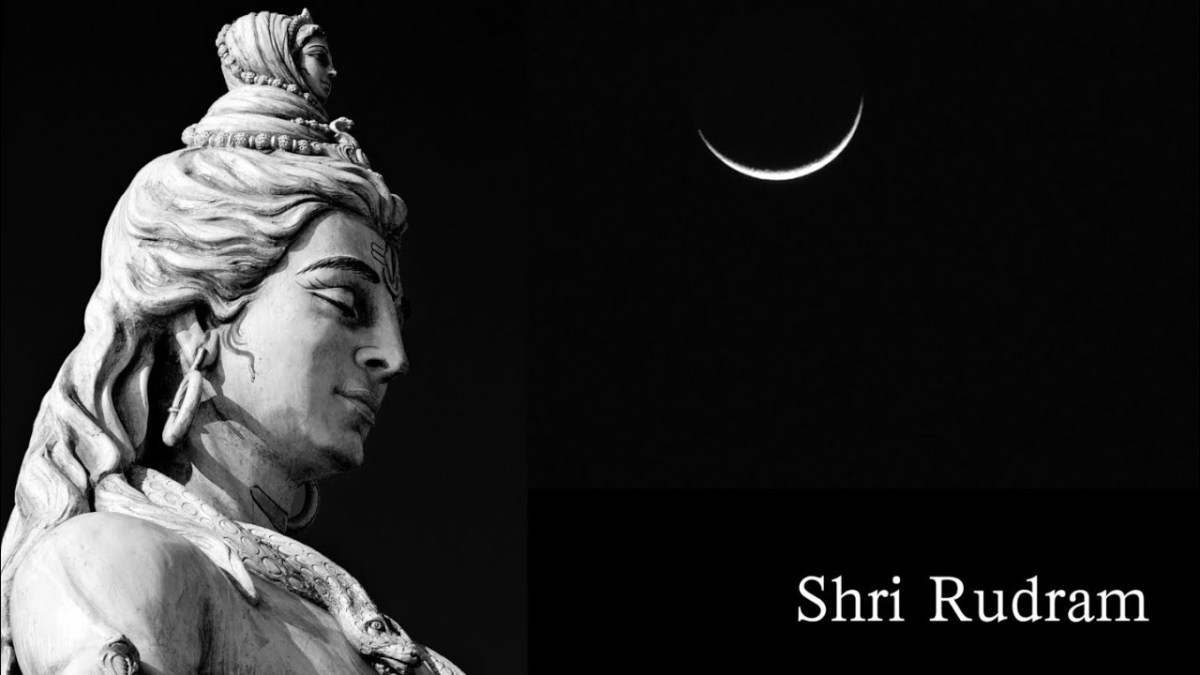
Vedic Chanting the Shri Rudram

The vibrations of this chant purify the atmosphere and mind, fill your being with peace and vigor, bestow protection, and coupled with a pure intention, have the power to grant your wishes, including liberation.

I discovered Vedic chants while playing rock music in my college years [yes, it seems like an unlikely combination, but not really -:)]. I realised the meter, the feel and the vibration, went so well with some of the fusion work I was doing and it also took me deep into myself. It intrigued me so much, that over the years, I have put different tunes to different Vedic chants, for my own pleasure and happiness. In this video, Vidura Barrios a fellow sadhaka (someone on the spiritual path) chants the Shri Rudram with the text on the screen, for us to follow. The abhyasa (regular practice) of scared chanting, is a great discipline in the Indian tradition.

The Shri Rudram is an ancient Vedic text and part of the Krishna Yajurveda (look up more here: https://en.wikipedia.org/wiki/Yajurveda). It is a powerful hymn in praise of Rudra, or Shiva. In the mystical tradition, Shiva represents the consciousness within everything, the pure essence within all, referred to in the Hindu scriptures as Sat Chit Ananda: truth, consciousness and bliss. It is in Shri Rudram that the great five syllable mantra, Om Namah Shivaya is first mentioned. You might simply listen to the chant during meditation or you could chant along.

The vibrations of the chant purify the atmosphere and mind, fill your being with peace and vigor, bestow protection, and coupled with a pure intention, have the power to grant your wishes, including liberation.

Chant For Your Heart | Chant for the World

Mantra repetition and chanting, centres the mind, gives you an inner pillar and reveals great inner insights.

Till I tried it, I did not know the power of chanting a sacred mantra again and again. From one point of view it seems repetitive, dull and boring. But from another point of view, and from my own inner experience of repeating a divine mantra over the years, I have found it unravels great inner bliss, deep understanding of the universe and produces the most divine “rasa” or juice within the body. Mantra repetition and chanting, centres the mind, gives you an inner pillar and reveals great inner insights.

Chanting Om Namah Shivaya – “I Bow to my Inner Self” (Video Length: 3 min 07 sec)

Either through a spiritual master, or through years of practice, the mantra becomes Chaitanya (or alive) in your body and being. And this Chaitanya mantra becomes your Inner Master and subtly guides you in your life, business, spiritual practices, music and anything you set your intention to. Use a good on ear headphone and listen to this ancient chant, in whichever time zone you are in.

Video Length: 3 min 07 sec