How Hindustani Classical Music Can Be Related to Western Rock and Metal

Hindustani classical music and rock and metal music are both powerful forms of art that can transcend boundaries and cultures. By fusing them together, musicians can create new sounds and experiences that enrich the musical landscape.

Hindustani classical music is one of the oldest and richest forms of music in the world. It has a complex and sophisticated system of ragas (melodic modes), talas (rhythmic cycles) and improvisation. Hindustani classical music has influenced many genres of music, including rock and metal.

Rock and metal music are genres that emerged in the 20th century, characterized by electric guitars, drums, bass and vocals. They often use distortion, heavy riffs, power chords and solos. Rock and metal music have also been influenced by various styles of music, including blues, jazz, folk and classical.

V Shivapriya and BR Somashekar Jois perform rhythmic phrases set to Mishrachaapu Tala. Remixed by Andre Antunes

One of the pioneers of fusing Hindustani classical music with rock and metal music was Ravi Shankar, a legendary sitar player and composer. He collaborated with many Western musicians, such as The Beatles, The Rolling Stones, George Harrison and John Coltrane. He introduced the sitar, the drone, the raga and the tala to Western audiences and inspired many rock and metal artists to experiment with Indian sounds and scales.

Another example of fusion between Hindustani classical music and rock/metal is the band Shakti, formed by legendary guitar player John McLaughlin and Indian musicians L. Shankar, Zakir Hussain and T.H. “Vikku” Vinayakram. Shakti blended Indian classical music with jazz and rock, creating a unique and powerful sound that influenced many musicians around the world.

But how exactly can Hindustani classical music be related to Western rock and metal? One way is through the use of scales and modes. Hindustani music has a wide range of scales, or ragas, that can evoke different moods and emotions. These scales can be adapted for Western instruments, such as guitar or keyboard, and used to create new melodies and harmonies. For example, the pentatonic scale used in blues and rock music can be traced back to the Indian raga Bhimpalasi.

Another way is through the use of rhythm. Hindustani music has a complex system of rhythmic cycles, or talas, that can be adapted to fit into rock and metal music. Talas can add a distinctive groove and feel to the music, and can be used for improvisation and soloing.

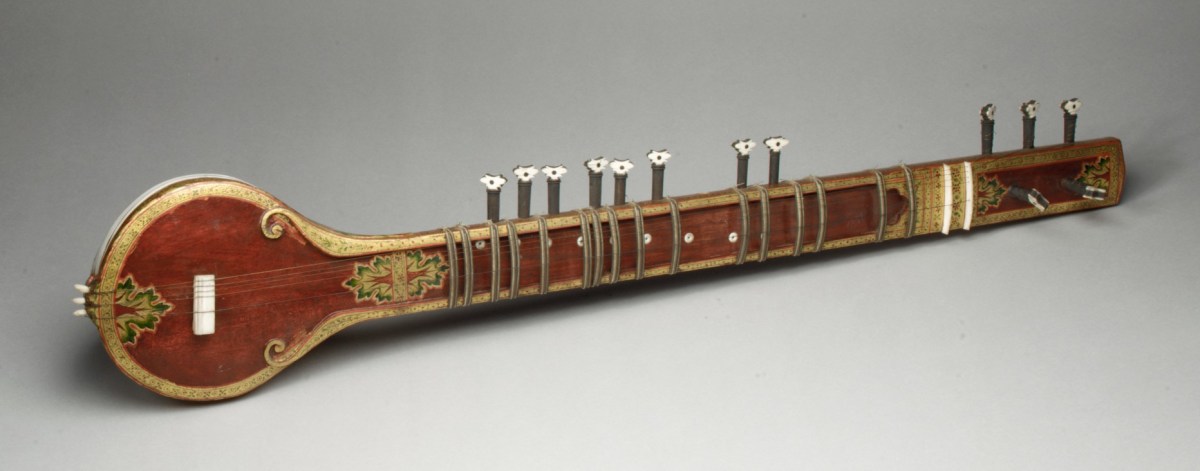
Finally, the use of Indian instruments such as sitar, tabla or sarod can add a unique flavor to rock and metal music. These instruments can be used for soloing, accompaniment or simply as a texture in the music.

In conclusion, Hindustani classical music and Western rock/metal music may seem like two very different genres, but they actually have a lot in common. The fusion of these two styles has led to some incredible music, and has opened the door to new creative possibilities for musicians around the world. So next time you listen to your favorite rock or metal band, remember that there may be a little bit of Hindustani classical music in there too.

———————————————————

Some examples of rock and metal songs that incorporate elements of Hindustani classical music are:

  • Norwegian Wood by The Beatles: This song features George Harrison playing the sitar in a raga-like melody.
  • Paint It Black by The Rolling Stones: This song uses a sitar riff and a drone in the background.
  • Kashmir by Led Zeppelin: This song uses a modal scale similar to a raga and a rhythmic pattern inspired by a tala.
  • Shakti by John McLaughlin: This song is a fusion of jazz-rock and Hindustani classical music, featuring McLaughlin on guitar, Zakir Hussain on tabla, L. Shankar on violin and Vikku Vinayakram on ghatam.
  • Om by John Coltrane: This song is a free jazz improvisation based on a chant from the Hindu scripture Bhagavad Gita, featuring Coltrane on saxophone, Pharoah Sanders on saxophone and flute, Alice Coltrane on piano and harp, Joe Brazil on flute, Donald Garrett on bass clarinet and bass, Jimmy Garrison on bass, Rashied Ali on drums and percussion and Ray Appleton on percussion.
  • Darbari Blues by Naad: This song is a fusion of Hindustani classical vocals with eclectic world flavours, featuring Sanjeevani Bhelande on vocals, Middle Eastern percussion, ambient bass grooves and Spanish guitars.

Hindustani classical music and rock and metal music may seem very different at first glance, but they share some common elements, such as:

– The use of improvisation: Both genres rely heavily on spontaneous creativity and expression.
– The use of emotion: Both genres convey various moods and feelings through music.
– The use of contrast: Both genres use dynamics, tempo changes, modulation and variation to create tension and release.

The Illusion of Separating Personal and Professional Life: Integrating for a More Fulfilling Experience

In this article, I argue that the separation between the personal and professional is simply a mental concept. Life is constructed by nature and is one continuum. We must weave together what we may consider personal and what we may consider work. Work is as much a part of our lives as our personal stuff is. And by integrating them, we can achieve more harmony, happiness, and fulfilment.

Many people struggle to balance their personal and professional lives. They feel stressed, overwhelmed, and guilty when they must juggle multiple roles and responsibilities. They think that they must separate their work from their life and that they have to sacrifice one for the other. But is this true? Is there such a thing as a clear-cut distinction between the personal and the professional? Or is this just a mental concept that we have created to cope with the complexity of modern life?

In this article, I argue that the separation between the personal and professional is simply a mental concept. Life is constructed by nature and is one continuum. We must weave together what we may consider personal and what we may consider work. Work is as much a part of our lives as our personal stuff is. And by integrating them, we can achieve more harmony, happiness, and fulfilment.

Photo by Kampus Production on Pexels.com

Let’s start by examining the origin of the idea of separating the personal and the professional. Historically, this idea emerged with the rise of industrialisation and urbanisation. People started to work in factories, offices, and other places that were physically separated from their homes and communities. They also started to specialise in different fields and professions that required specific skills and knowledge. As a result, they developed different identities and roles for their work and their life. They had to follow different rules, norms, and expectations in each domain. They had to switch between different modes of thinking, feeling, and behaving.

This separation was reinforced by the social and cultural values of modernity. Individualism, rationality, efficiency, productivity, competition, and achievement became the dominant ideals of work. Emotion, intuition, creativity, spirituality, cooperation, and well-being became the dominant ideals of life. Work was seen as a means to an end, a way to earn money and status. Life was seen as an end in itself, a way to enjoy leisure and happiness. Work was associated with stress and pressure. Life was associated with relaxation and pleasure.

However, this separation is not natural or inevitable. It is a social construct that we have created and maintained through our beliefs, attitudes, and behaviours. It is not based on any objective reality or universal truth. It is based on our subjective perceptions and interpretations of reality. And these perceptions and interpretations can change over time and across contexts.

In fact, there are many examples of cultures and societies that do not separate the personal and the professional as much as is done in the modern world. For instance, in many indigenous cultures, work is seen as an expression of one’s identity, purpose, and spirituality. It is not just a way to make a living, but a way to make meaning. Work is integrated with life in a holistic way. People do not work for external rewards or recognition but for internal satisfaction and contribution. They do not work against nature or other people, but with them in harmony and cooperation.

Similarly, in many Eastern cultures, work is seen as a part of one’s duty, karma, and dharma. It is not just a matter of choice or preference, but a matter of responsibility and destiny. Work is aligned with life in a moral way. People do not work for themselves or their own interests but for others and the greater good. They do not work out of ego or desire, but out of humility and detachment.

By integrating our personal and professional lives, we can create a more holistic and fulfilling experience of life. We can enjoy the benefits of both domains and leverage the synergies and opportunities that arise from them. We can also avoid the conflicts and contradictions that result from trying to maintain a false dichotomy. We can live more fully and authentically, without compromising any part of ourselves.

5 Steps to Creating a Life That Reflects Your Values and Vision

A reflective life is one that is mindful, intentional, and authentic. It is a life that is based on your own inner wisdom and guidance, rather than external expectations or pressures. A life that is aligned with your values and vision is one that is congruent, meaningful, and fulfilling. It is a life that expresses who you are and what you stand for.

Many people go through life without a clear sense of direction or purpose. They may feel dissatisfied, restless, or unhappy with their current situation, but they don’t know how to change it. They may have vague goals or dreams, but they don’t have a plan to achieve them. They may have values that are important to them, but they don’t live in alignment with them.

If you are one of these people, you may benefit from creating a life that is reflective and in true alignment with your values and vision. A reflective life is one that is mindful, intentional, and authentic. It is a life that is based on your own inner wisdom and guidance, rather than external expectations or pressures. A life that is aligned with your values and vision is one that is congruent, meaningful, and fulfilling. It is a life that expresses who you are and what you stand for.

Photo by Alex Green on Pexels.com

But how do you create such a life? Here are some steps you can take to start living more reflectively and authentically.

1. Identify your core values. Your values are the principles that guide your decisions and actions. They reflect what matters most to you and what gives you a sense of satisfaction and joy. To identify your core values, you can ask yourself questions such as: What do I care about deeply? What do I stand for? What makes me feel alive? You can also use tools such as online quizzes or lists of values to help you narrow down your choices. Once you have identified your core values, rank them in order of importance and write them down.

2. Define your vision. Your vision is your ideal picture of how you want your life to be. It is your aspiration, your dream, your destination. To define your vision, you can use techniques such as visualization, journaling, or collage-making. Imagine yourself living your best life and describe it in detail. What are you doing? Who are you with? How do you feel? What impact are you making? Be as specific and vivid as possible and write down your vision.

3. Assess your current reality. Now that you have a clear idea of what you want your life to look like, it’s time to take a honest look at where you are right now. How does your current reality match up with your values and vision? What aspects of your life are in alignment and what aspects are out of alignment? What are the gaps or discrepancies between where you are and where you want to be? Be objective and realistic and write down your assessment.

4. Set goals and action steps. The next step is to bridge the gap between your current reality and your desired future. You can do this by setting SMART goals (Specific, Measurable, Achievable, Relevant, Time-bound) that will move you closer to your vision. For each goal, break it down into smaller action steps that will help you accomplish it. Make sure your goals and action steps are aligned with your values and vision and write them down.

5. Review and adjust regularly. Creating a reflective and authentic life is not a one-time event, but an ongoing process. You need to constantly monitor your progress and evaluate your results. Are you moving in the right direction? Are you achieving your goals? Are you living according to your values? Are you happy with your life? If not, what needs to change? Be flexible and adaptable and make adjustments as needed.

Some examples of people who have created a reflective and authentic life are:

– Oprah Winfrey, who has built a media empire based on her values of empowerment, education, and service.

– Steve Jobs, who revolutionized the technology industry based on his vision of innovation, creativity, and simplicity

– Malala Yousafzai, has become a global advocate for girls’ education based on her passion for justice, equality, and peace.

Some authors who have written about creating a reflective and authentic life are:

– Stephen Covey, who wrote The 7 Habits of Highly Effective People, outlines a framework for personal effectiveness based on principles and values.

– Brené Brown, who wrote The Gifts of Imperfection, explores how to embrace vulnerability, authenticity, and courage.

– Simon Sinek, who wrote Start With Why, explains how to inspire yourself and others by finding your purpose.

Broaden your container, to make your life a celebration

Our ability initially to let “thy will be done”, and eventually merge your will into the universal will, is the base for a future larger expansion.

How do we expand ourselves to give and receive more? How do we ensure that all our dreams are fulfilled? How do we grow our boundaries, to make them commensurate with the universe’s boundaries? How do we ensure, that the universal energy is flowing through us?

We need to expand our container – our container of understanding, energy vibration and intuition. Our ability initially to let “Thy will be done” and work on that as a practice to eventually graduating to merging ones own will, into the universal will. This creates the base for a future larger expansion of our spirit. Once that merger is established, a line opens up to universal vibration; and what you want, crave and desire is also what the universe wants, craves and desires. This then makes your life, a celebration for the larger truth and you become a wish fulfilling tree, for yourself and the world.

Todays video looks at this connection for manifestation by Sri Akarshana: