
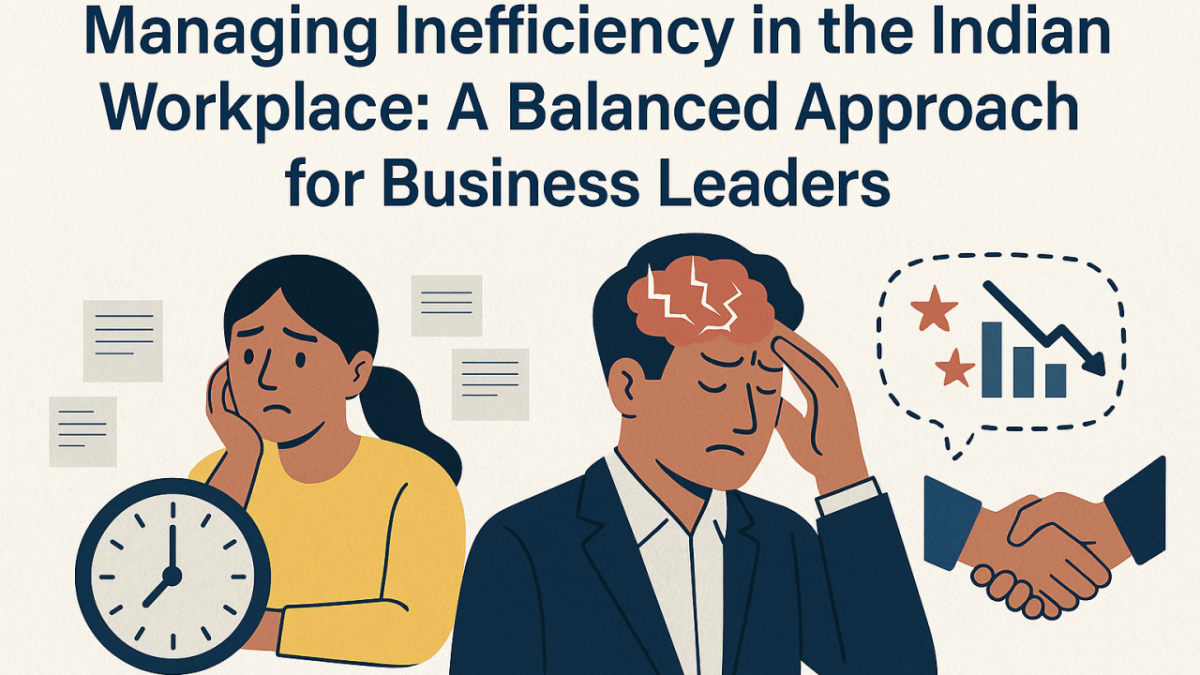
Inefficiency is among the most pervasive challenges that Indian business leaders face across various sectors. While talent abounds, the execution gap is often frustratingly wide. Meetings are filled with enthusiastic promises, yet deadlines slip. Lunch breaks stretch longer than agreed, and follow-ups become the norm rather than the exception. So, how does a business leader manage this reality, not just operationally, but also emotionally?
1. Accept the Ground Reality, Then Build Systems
The first step is accepting that Indian work culture often operates at a slower rhythm. This isn’t a moral judgment—it’s a structural and cultural reality. Instead of resisting it, effective leaders build frameworks that assume some delay and create buffers for it. Micro-deadlines, checklists, and short daily stand-ups help keep momentum without relying on long, unproductive catch-ups.
2. Train for Execution, Not Eloquence
In India, there is often a large gap between what is said and what is done. Employees are trained to please with words, not outcomes. Business leaders must therefore shift the focus from articulation to action. Create a culture that rewards delivery over jargon. Publicly acknowledge those who execute silently and well — this subtle shift in value signals gets noticed.
3. Audit, Don’t Assume
Trust is good. Verification is better. Many projects fail because leaders assume work is being done as committed. Instituting a culture of gentle auditing, not micromanaging, helps bridge the trust-execution divide. Tools like shared dashboards or weekly deliverables can help track progress without causing friction.
4. Protect Your Mental Bandwidth
Leaders often end up personally carrying the emotional burden of inefficiency. The solution? Emotional detachment with clarity. Recognise that people will overpromise. They may not match your urgency or ownership. That’s not a reflection on you — it’s a professional reality. Instead of investing emotional energy into disappointment, create multiple fallback plans and focus on what can be done, not what should have been.
5. Build Around the Doers
Every organisation has a few who consistently deliver. Identify them. Empower them. Compensate them better. Sometimes, progress in India is not about moving the entire team at once but giving key individuals the space to push the engine forward while others slowly catch up.
Ultimately, managing inefficiency in India is part strategy, empathy, and mental discipline. The most effective leaders learn to work with the system, not against it.
 Dennis Taraporewala