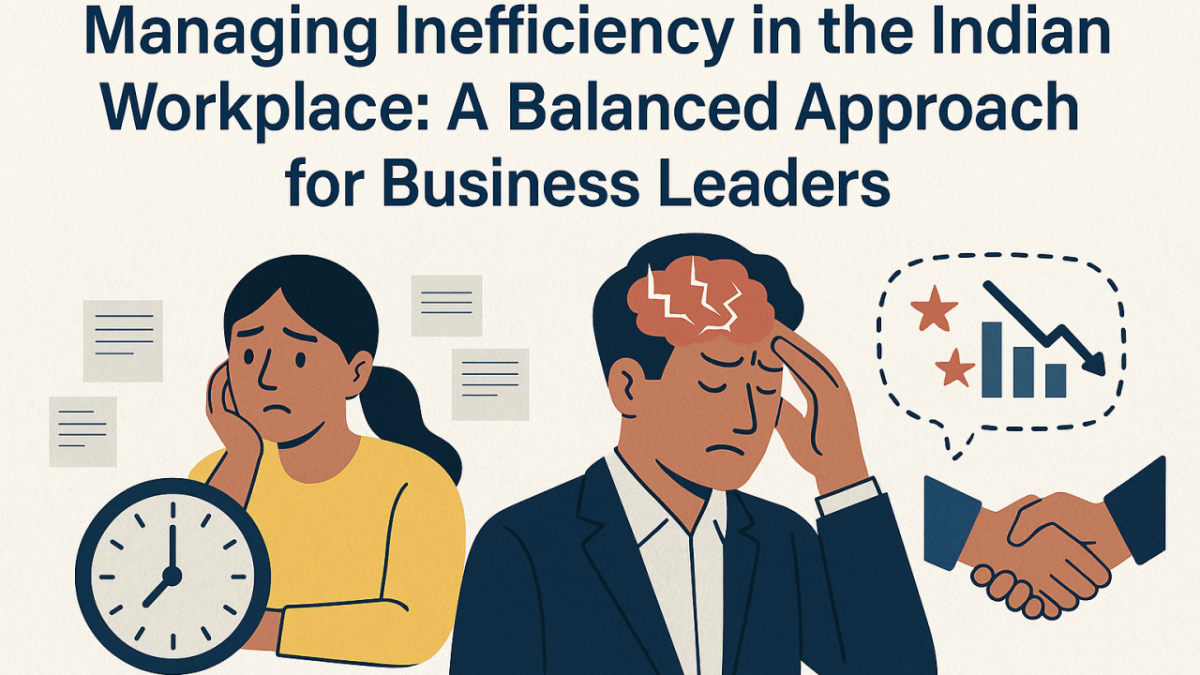
How Indian Leaders Tackle Inefficiency Challenges

Inefficiency is among the most pervasive challenges that Indian business leaders face across various sectors. While talent abounds, the execution gap is often frustratingly wide. Meetings are filled with enthusiastic promises, yet deadlines slip. Lunch breaks stretch longer than agreed, and follow-ups become the norm rather than the exception. So, how does a business leader manage this reality, not just operationally, but also emotionally?

1. Accept the Ground Reality, Then Build Systems

The first step is accepting that Indian work culture often operates at a slower rhythm. This isn’t a moral judgment—it’s a structural and cultural reality. Instead of resisting it, effective leaders build frameworks that assume some delay and create buffers for it. Micro-deadlines, checklists, and short daily stand-ups help keep momentum without relying on long, unproductive catch-ups.

2. Train for Execution, Not Eloquence

In India, there is often a large gap between what is said and what is done. Employees are trained to please with words, not outcomes. Business leaders must therefore shift the focus from articulation to action. Create a culture that rewards delivery over jargon. Publicly acknowledge those who execute silently and well — this subtle shift in value signals gets noticed.

3. Audit, Don’t Assume

Trust is good. Verification is better. Many projects fail because leaders assume work is being done as committed. Instituting a culture of gentle auditing, not micromanaging, helps bridge the trust-execution divide. Tools like shared dashboards or weekly deliverables can help track progress without causing friction.

4. Protect Your Mental Bandwidth

Leaders often end up personally carrying the emotional burden of inefficiency. The solution? Emotional detachment with clarity. Recognise that people will overpromise. They may not match your urgency or ownership. That’s not a reflection on you — it’s a professional reality. Instead of investing emotional energy into disappointment, create multiple fallback plans and focus on what can be done, not what should have been.

5. Build Around the Doers

Every organisation has a few who consistently deliver. Identify them. Empower them. Compensate them better. Sometimes, progress in India is not about moving the entire team at once but giving key individuals the space to push the engine forward while others slowly catch up.

Ultimately, managing inefficiency in India is part strategy, empathy, and mental discipline. The most effective leaders learn to work with the system, not against it.


Mastering the Art of Deep Work: Strategies to Achieve Laser Focus and Eliminate Distractions

Deep work, a term coined by author and professor Cal Newport, refers to the state of intense concentration and flow that allows individuals to produce high-quality work and achieve their goals.

In today’s hyper-connected world, maintaining focus and productivity has become a challenge. With constant notifications, emails, and social media updates vying for our attention, the ability to engage in deep work has become a precious skill. Deep work, a term coined by author and professor Cal Newport, refers to the state of intense concentration and flow that allows individuals to produce high-quality work and achieve their goals. In this blog entry, we will explore five effective ways to conduct deep work and provide valuable tips to keep distractions at bay.

  1. Establish a Distraction-Free Environment

Creating an environment that minimizes distractions is essential for deep work. Start by designating a dedicated workspace where you can concentrate without interruptions. Choose a quiet area away from high-traffic zones and inform your colleagues or family members about your deep work schedule to avoid unnecessary disruptions. Consider using noise-cancelling headphones or instrumental music to drown out ambient noise and set the stage for deep concentration.

  1. Time Blocking and Ritualize Deep Work

To prioritize deep work effectively, implement a time-blocking technique in your schedule. Set aside specific blocks of time dedicated solely to deep work, ensuring you have ample time to immerse yourself in complex tasks without distractions. Create a consistent routine by scheduling in-depth work sessions during your peak energy periods. Ritualize the beginning and end of each session with simple rituals like lighting a candle or setting a specific intention to signal your brain that it’s time to focus.

  1. Embrace Digital Detoxes and Mindfulness Practices

Digital devices can be a significant source of distractions. Taking regular digital detoxes can help you regain focus and clarity. During deep work sessions, turn off notifications on your phone, close unnecessary tabs on your computer, and consider using productivity apps or browser extensions to block time-wasting websites or apps. Practising mindfulness techniques, such as deep breathing or meditation, can also improve your ability to concentrate and reduce mind wandering.

  1. Prioritize Deep Work Before Shallow Work

Shallow work, characterized by low-value tasks such as email responses or administrative duties, often dominates our workday. To achieve deep work, reverse this trend by prioritizing deep work sessions before engaging in shallow work. Allocate the most productive part of your day to tasks that require intense focus, leaving shallow work for later when your energy levels may be lower. Completing deep work first sets a positive tone for the rest of your day and ensures the most important work gets done.

  1. Use the Pomodoro Technique and Practice Single-Tasking

The Pomodoro Technique is a time management method that breaks work into intervals, typically 25 minutes long, followed by short breaks. This technique allows you to maintain focus while incorporating regular breaks to recharge and prevent burnout. Embrace single-tasking by dedicating your full attention to one task at a time. Multitasking can lead to reduced productivity and increased distractions. By focusing on a single task, you can delve deeper, maintain flow, and accomplish more in less time.

In an era filled with distractions, mastering the art of deep work has become a vital skill for personal and professional success. By implementing these five strategies, you can create an environment conducive to deep concentration, overcome distractions, and unlock your true potential. Remember, deep work is not just about productivity; it is about engaging in meaningful work that brings a sense of fulfilment and accomplishment. Embrace the power of deep work, and watch your productivity soar to new heights.

The Psychology of Gambling: Understanding, Addressing, and Overcoming Problematic Behaviours

Gambling can have severe and multifaceted consequences. It negatively affects mental health, leading to stress, anxiety, depression, guilt, shame, and low self-esteem. It also impairs financial well-being,

Casinos are popular destinations for entertainment and socialization, offering excitement to many. However, it is essential to recognize that some individuals may develop problematic gambling behaviours, leading to adverse effects on their psychological well-being, finances, and relationships. In this article, I delve into the psychological factors motivating gambling, explore the consequences of excessive gambling, and provide strategies to prevent or alleviate gambling problems.

  1. The Illusion of Control: One significant psychological factor driving individuals to gamble is the illusion of control. This bias involves overestimating one’s ability to influence or predict the outcome of random events, such as rolling dice, drawing cards, or spinning slot machines. Those with a high illusion of control believe that their skills, strategies, or superstitions can enhance their chances of winning. They often attribute wins to their actions while blaming losses on external factors like bad luck. This cognitive bias reinforces gambling behaviour and hinders the acceptance of feedback or reality checks.
  2. The Gambler’s Fallacy: The gambler’s fallacy is another influential psychological factor shaping gambling behaviour. This fallacy revolves around the mistaken belief that past outcomes can affect future outcomes in a random process. For instance, a gambler may believe that after a long losing streak, they are due for a win, or vice versa. However, every outcome in gambling is independent and unaffected by previous results. Regardless of historical patterns, the probability of winning or losing remains the same.
  3. The Availability Heuristic: The availability heuristic also plays a role in gambling behaviour. This heuristic leads individuals to judge the frequency or likelihood of an event based on how easily examples come to mind. For example, a gambler may overestimate their chances of winning because they vividly remember their past wins or those of others while conveniently ignoring or forgetting their losses. This skewed perception of reality fosters unrealistic optimism regarding gambling outcomes.

The Negative Impact of Excessive Gambling:

Excessive gambling can have severe and multifaceted consequences. It negatively affects mental health, leading to stress, anxiety, depression, guilt, shame, and low self-esteem. It also impairs financial well-being, often resulting in debt, bankruptcy, poverty, and legal issues. Interpersonal relationships suffer due to conflicts, distrust, isolation, and increased divorce rates. Additionally, excessive gambling can interfere with work performance, education, and personal goals.

Strategies to Prevent or Reduce Gambling Problems:
Fortunately, several strategies can help prevent or reduce gambling problems:

  1. Setting Limits: Establishing and adhering to limits on time and money spent gambling is crucial. This approach fosters self-control and responsible behaviour.
  2. Seeking Support: Professional counsellors, support groups, and self-help programs offer valuable guidance and support for overcoming gambling addiction. These resources provide individuals with the necessary tools to regain control over their behaviour.
  3. Engaging in Alternative Activities: Finding alternative activities that provide positive reinforcement and satisfaction without involving gambling is essential. Hobbies, sports, volunteering, and socializing can fulfil individuals’ needs for enjoyment and social interaction while diverting their attention from gambling.

While gambling can be a source of entertainment for some, it can escalate into a severe problem for others. Understanding the psychological factors influencing gambling behaviour and recognizing the negative impacts of excessive gambling empowers individuals to make informed and responsible decisions about their gambling habits. Seeking help when needed and implementing preventive measures can help individuals address and overcome gambling problems, leading to improved psychological well-being, financial stability, and healthier relationships.

The Transformative Impact of AI on Public Relations

AI presents PR professionals with a range of opportunities to optimize their strategies, streamline processes, and make data-driven decisions.

Artificial intelligence (AI) is revolutionizing various industries, including the field of public relations (PR). By automating tasks, providing data-driven insights, and enhancing decision-making processes, AI is poised to bring about significant changes in the PR landscape. This article explores five key ways in which AI is expected to reshape PR in the near future.

AI in PR
  1. AI-Enhanced Media Relations: AI empowers PR professionals to streamline their media outreach efforts and improve relationship-building with journalists and influencers. With AI tools, PR practitioners can identify the most suitable media contacts for their stories, based on journalists’ preferences, interests, and past coverage. For example, an AI-powered platform may analyze a journalist’s articles and social media interactions to determine their topic expertise and engagement patterns. By personalizing pitches and follow-ups using AI-generated insights, PR professionals can maximize their chances of securing media coverage. Furthermore, AI can monitor the impact of media coverage by tracking sentiment analysis, reach, and engagement metrics.
  2. AI-Driven Content Creation: AI offers significant potential to enhance content creation processes for PR professionals. Natural language generation (NLG) algorithms can generate coherent and engaging content that resonates with target audiences. AI-driven computer vision capabilities can assist in creating visually appealing content such as infographics and videos. Additionally, AI can optimize content for search engines and social media platforms, ensuring maximum visibility and engagement. Furthermore, AI-powered analytics can suggest the optimal timing and distribution channels for content dissemination.
  3. AI-Enabled Sentiment Analysis: Sentiment analysis plays a crucial role in understanding stakeholders’ opinions, emotions, and perceptions. AI, specifically natural language processing (NLP) and machine learning techniques can automate sentiment analysis at scale. PR professionals can gain valuable insights into public sentiment about their brands, products, or campaigns, enabling them to make data-driven decisions. AI-powered sentiment analysis tools can identify emerging trends, potential issues, and opportunities for PR campaigns, allowing practitioners to adapt their strategies accordingly.
  4. AI-Facilitated Crisis Management: AI equips PR professionals with powerful tools for crisis detection, prevention, and management. By employing predictive analytics and social listening capabilities, AI can identify early warning signs of potential crises, enabling proactive intervention. AI algorithms can analyze vast amounts of data from various sources, including social media, news articles, and customer feedback, to identify emerging issues that could escalate into crises. Furthermore, AI can simulate crisis scenarios, providing PR professionals with guidance on appropriate response strategies and potential outcomes.
  5. AI-Promoted Ethical PR: AI technology offers opportunities for PR professionals to uphold ethical standards and foster trust in their communications. Explainable AI and transparency tools enable PR practitioners to understand how AI systems make decisions, ensuring accountability and fairness. AI can also help monitor and combat misinformation, disinformation, and fake news by leveraging natural language processing techniques to detect false or misleading information. By leveraging AI-powered tools, PR professionals can contribute to promoting credibility, accuracy, and authenticity in their communications.

AI presents PR professionals with a range of opportunities to optimize their strategies, streamline processes, and make data-driven decisions. By leveraging AI in media relations, content creation, sentiment analysis, crisis management, and ethical PR practices, PR practitioners can stay ahead in a rapidly evolving landscape. However, it is crucial for PR professionals to remain mindful of potential challenges related to data privacy, security, bias, accountability, and regulation as they embrace AI in their practices. Adapting to the new PR models and understanding the implications of AI will be essential for success in the AI-powered future of public relations.